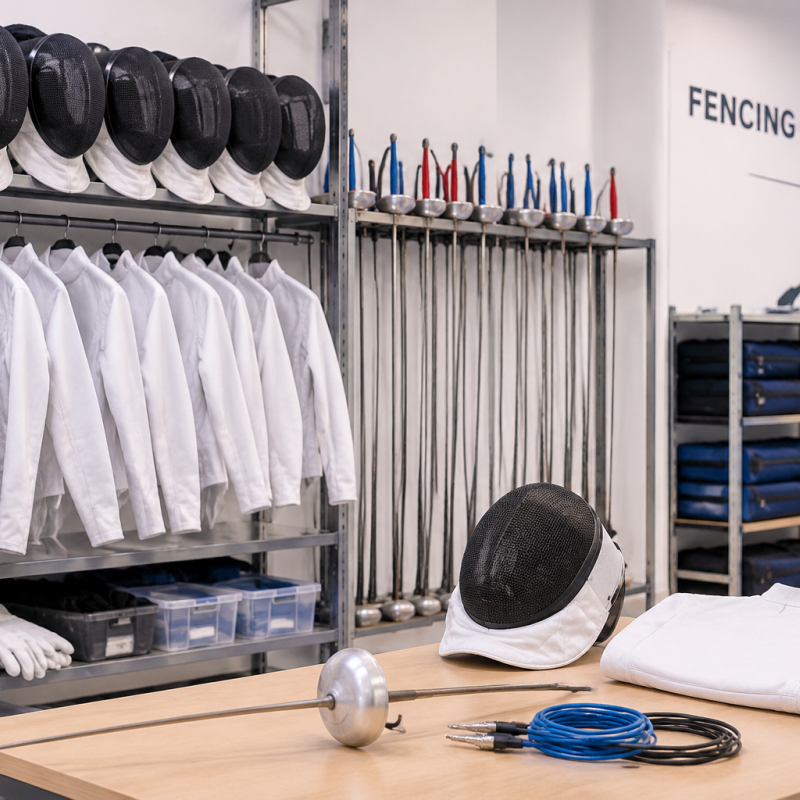
How to Organize and Maintain Fencing Equipment in a Fencing Club
Proper equipment management is essential for every fencing club. Whether a club has a small group of beginners or a large team of competitive fencers, keeping equipment organized and well-maintained helps create a safer, more efficient training environment.
Fencing equipment is used regularly and may be shared by multiple club members. Without a clear storage and maintenance routine, equipment can become difficult to find, wear out faster, or be overlooked when it needs repair.
Here are some practical ways to organize and maintain fencing equipment in your club.
1. Organize Equipment by Category
The first step is to create a clear storage system. Group similar items together so that coaches and fencers can find what they need quickly.
A fencing club can organize its equipment into the following categories:
Fencing Weapons: Foils, épées, sabres, blades, guards, grips, and weapon accessories.
Protective Equipment: Fencing masks, jackets, breeches, plastrons, gloves, and chest protectors.
Electric Fencing Equipment: Body cords, mask cords, electric jackets, reels, and scoring equipment.
Training Accessories: Target equipment, practice accessories, and other training supplies.
Use clearly labeled shelves, storage boxes, racks, or cabinets for each category. Smaller accessories can be stored in separate containers to prevent them from getting mixed up or lost.
2. Create a Regular Equipment Inspection Routine
Regular inspections help identify damaged or worn equipment before it becomes a bigger problem.
Coaches or designated equipment managers should check club equipment on a regular basis.
Pay attention to:
Weapons: Check blades, guards, grips, tips, and electrical connections for visible damage or looseness.
Masks: Inspect the mesh, bib, straps, and fastening systems.
Fencing Uniforms: Check jackets, breeches, plastrons, and gloves for tears, worn areas, or damaged closures.
Electric Equipment: Examine body cords, mask cords, connectors, and cables for visible damage or loose connections.
Any equipment that appears damaged should be set aside for further inspection or repair. Equipment should only return to use after it has been checked and considered suitable.
3. Clean and Dry Equipment After Training
Fencing equipment is often exposed to sweat, moisture, and repeated contact during training. Regular cleaning helps keep shared equipment in better condition.
Clubs should establish clear cleaning procedures:
Allow damp equipment to dry completely before storing it.
Clean reusable protective equipment according to the manufacturer's care instructions.
Keep gloves, uniforms, and other fabric items clean and dry.
Wipe down suitable hard surfaces and equipment after use.
Avoid storing wet equipment in closed bags or containers.
For shared equipment, it is especially important to maintain a consistent cleaning routine between users.
4. Store Equipment Properly
Correct storage helps reduce unnecessary wear and makes equipment easier to access.
Consider these storage practices:
Hang fencing uniforms when appropriate to help them keep their shape and dry properly.
Store masks in a way that protects the mesh from pressure or impact.
Keep fencing weapons in designated racks or protective cases.
Store electrical accessories neatly to prevent cables from becoming tangled.
Keep small replacement parts and accessories in labeled containers.
A clean, dry, and organized storage area also makes it easier for coaches to check equipment before each training session.
5. Keep an Equipment Inventory
A simple inventory system helps clubs understand what equipment they have and what needs attention.
Record important information such as:
Equipment name and category
Quantity available
Size or model, where applicable
Purchase date
Current condition
Repair or replacement status
Clubs can use a spreadsheet or inventory management system to update these records. It is also helpful to record which equipment is frequently used and which items need replacement.
For clubs with many members, keeping track of uniform sizes and equipment quantities can make future purchasing more efficient.
6. Prepare Equipment Before Competitions
Competition preparation requires additional attention. Before an event, coaches and equipment managers should check that the necessary equipment is available and in suitable condition.
A preparation checklist may include:
Fencing weapons and spare weapons
Masks and protective clothing
Gloves and chest protectors
Body cords and mask cords
Electric jackets and other discipline-specific equipment
Spare accessories and replacement parts
Preparing equipment in advance helps reduce last-minute problems and allows fencers to focus on their performance.
7. Assign Equipment Management Responsibilities
Equipment management works best when responsibilities are clearly assigned.
For example:
Coaches: Check equipment before training and report problems.
Fencers: Return shared equipment to its designated storage area after use.
Equipment Managers: Maintain inventory records and arrange inspections or repairs.
Club Administrators: Plan purchases and replacements based on equipment condition and club needs.
When everyone follows the same procedures, equipment is easier to manage and the storage area stays organized.
Conclusion
Organizing and maintaining fencing equipment is an important part of running an efficient fencing club. By sorting equipment into categories, carrying out regular inspections, cleaning items after use, storing them properly, and maintaining an accurate inventory, clubs can manage their equipment more effectively.
A consistent equipment management routine helps coaches and fencers spend less time looking for supplies and more time focusing on training.
Looking for reliable fencing equipment for your club?
OK FENCING offers a range of fencing products, including fencing weapons, protective clothing, electric fencing accessories, and training equipment. Contact us to learn more about our products and discuss your club's equipment requirements.